Film

The 666 Film Challenge 2025

Over the May Bank Holiday weekend, I was originally aiming to attend the Romford Film Festival at the newly reborn Lumiere Cinema. When it became clear that this was not going to happen, I turned my attention to the 666 Film Challenge, which takes place over the same time period. If I wasn’t able to watch films over the long weekend, perhaps I could actually make one!
666 Short Film Challenge poster 2025

Rules

The 666 Challenge is a competition organised by the Independent Horror Society. It requires all those taking part to write, shoot, edit and deliver a completed horror short, to the organisers, within 66hours and 6minutes. Although some preparation is allowed before the official start time, such as organising props and locations, the majority of the work from scripting to filming to editing has to be done within the allotted time frame. To ensure that the submitted films have actually been made for the competition, a set of requirements are emailed out at the start of the challenge, to all those who have paid to participate.
This years challenge had a number of requirements. Each film had to include, as a prop, a hook; a specific sound effect (out of two supplied by the organisers); a particular line of dialogue (from a choice of four); and all films had to somehow incorporate the theme of ‘invasion’.

To take part or not to take part – that was a question

At first, I decided against taking part. I felt that I had enough going on, not least trying to finish the third Entwhistle book. But after a chat with my wife and a think, I decided otherwise.
At the very least, I thought the challenge would be a fun learning curve. It would allow me to experiment with a few ideas, in preparation for a longer ‘short’ film, I am hoping to shoot in October. Plus if everything went to plan, I would end up with a finished film, without any long winded preparation time or much of my usual, mental stalling.
666 also met my initial set of rules I had devised for making Am Here, namely:-

1. Actually ask yourself – are you going to make this film? Commit to your answer.
2. The Film will be 5 minutes or less.
3. Spend no money. Only use what is available to you, including your location.
4. The film will not be perfect, not even close. Just make something that exists.
5. You will enter it into a film festival. You will have no control over it being accepted. The important thing is to get it entered.
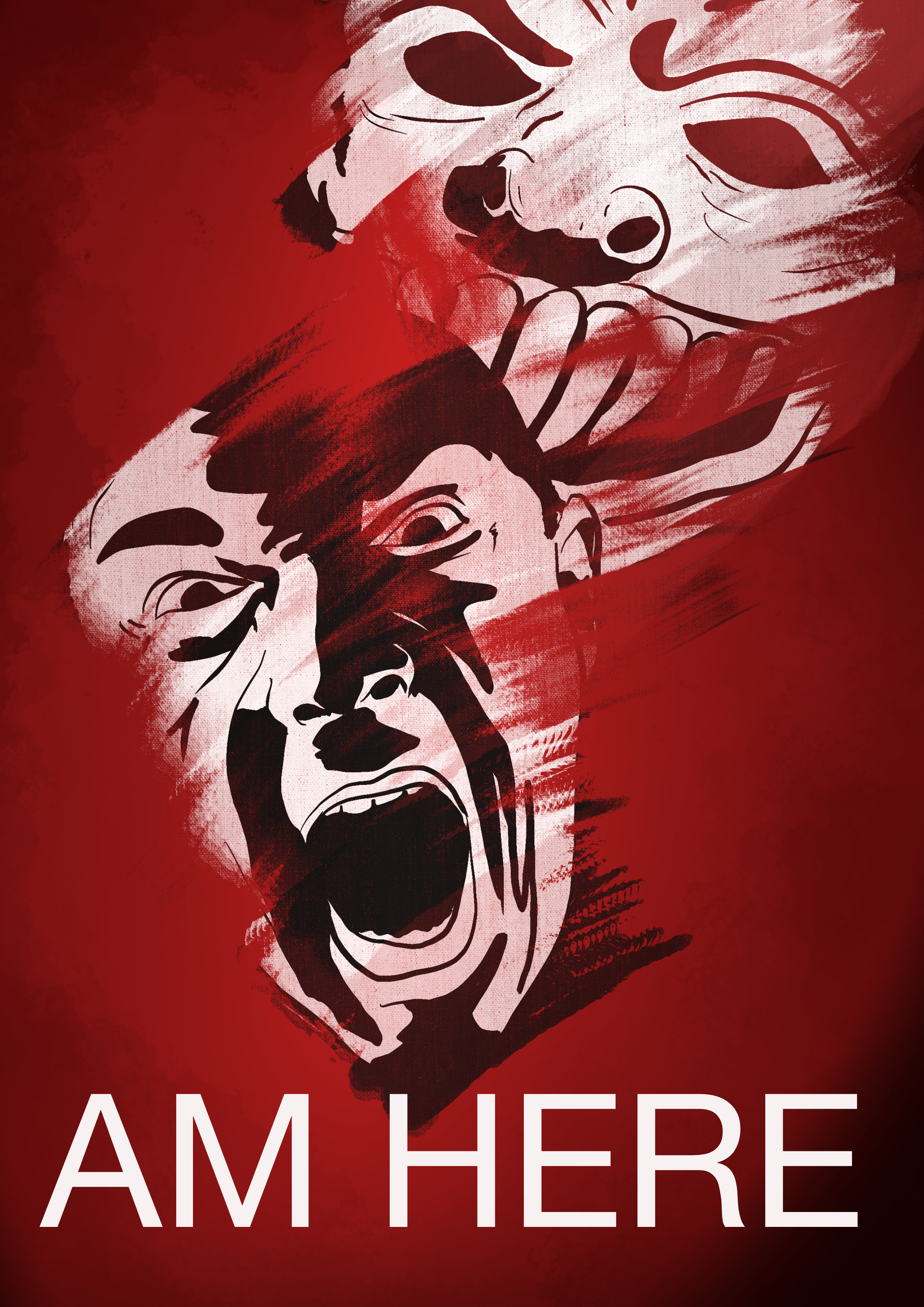
Am Here Film Poster

The reason behind setting up these rules for Am Here was because, so often had I thought about making something, only to never actually do it. By laying out a game plan of sorts, and by having a definite start time, end time and goal. I felt that this gave me the chance to actually complete something. That something might not be good but it would exist. And these rules and this reasoning seemed to fit perfectly within the 666 competition.

Choices

Any project requires you to make series of choices, both technical and creative. Going down one path will often, like a line of falling dominoes, force you to make a whole series of other choices as well. With 666 my first decision was to shoot on my daughers Iphone 13 Pro (I decided my decidly dated Iphone 7 just would not cut it). And that I would use the Filmic Pro App, as I had seen several good reviews for it on Youtube. Plus, I could use it for free as part of the trial period and cancel before I had to pay for it.
Using an Iphone was a big change from Am Here. That film was shot primarily on a Canon 650D, using a mixture of the camera’s kit lens and a 50mm lens. But with the longer film in mind, I thought I would try the Iphone to get an idea of the results and to see if it would work for my next project.
For lighting, I had no lights apart from a couple of bed room spot lamps; and for sound I used the Zoom APH-1n, which had been my major purchase for Am Here. When it came to it though, I ended up using the audio directly from the Iphone shots. Although I did use the Zoom when recording the voice of the doll.
I did purchase a horror make-up kit, some rubber fingers and a fake head but that was it. So with my eldest on camera / phone, my youngest acting, and my eldest’s boyfriend on sound, and all of us wrangling the dog out of shot, we were ready to make The Doll’s House.
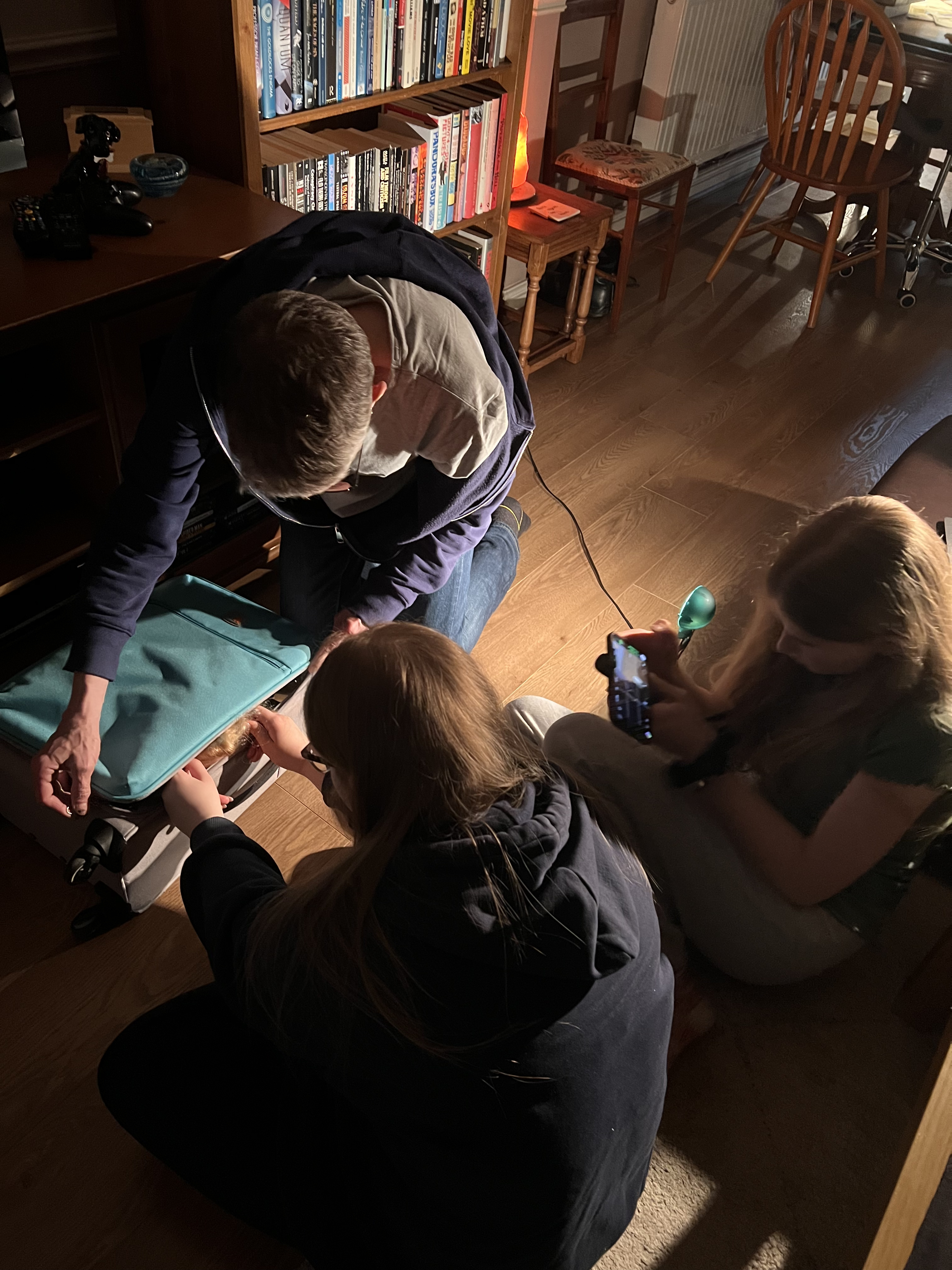
Behind the scenes of the dolls house. The crew and actor gather around a suitcase as it is filmed on an iPhone.

Lessons Learned

Camera – The Iphone is a great tool to have. You can shoot fast; it is obviously, supremely portable, but it does have its own quirks and limitations. Kent Lamm in his really interesting video on how he shot his short film Witchfish on an Iphone, makes a very important point – an Iphone is good for making certain projects but not others – in many respects the project dictates the camera you are going to use to film it.
With that in mind, I would say that a cinematographer, with all their years of knowledge and experience, would be able to overcome an Iphone’s limitations. However, I am not a cinematographer and watching 20 videos on lighting, is not going to make me into one. Instead, I have a passable understanding of my Canon camera and since my next project should have more production time, I won’t need to take advantage of the Iphone’s speed of use, I can attempt to set up my shots how I want them.
Also, if I were to shoot on a phone, I would not use the FilmicPro app again. When dragging the footage into Adobe Premier Pro, it became clear that the app played fast and loose with the set frame rate. This meant the files had to be re transcoded. However, even after doing this, jerky motion was still visible throughout. But in the future, I would want to film in 3840×2160 – which is something an iPhone can do but not my current Canon camera. So, I will either have to solve my difficulties shooting on a phone or stick with my Canon and therefore continue shooting at 1920×1080.
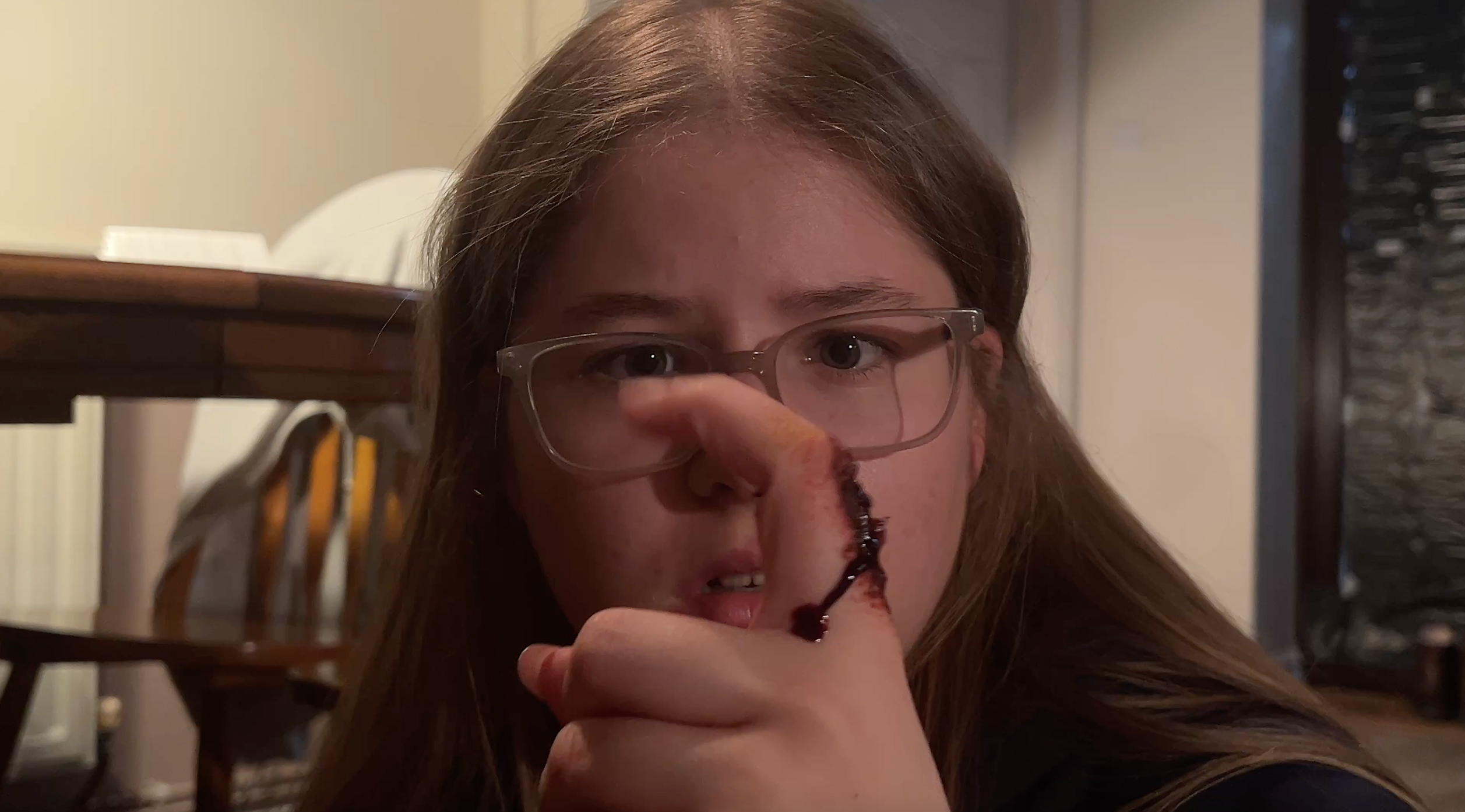
Kate looks at her bloodied finger

Planning – 666 deliberately gives you very little planning time. It is about diving into a project and just getting something made, and for that it has to be applauded. However, this does not mean all the films look cheap, rushed and amateurish, some of the films submitted to past 666 competitions look extremely professional. The fact that mine does not, is probably testament to how little I know about making a film. That aside, what 666 hammers home is the mantra ‘fail to plan, plan to fail,’ and not solely in the context of this particular competition, but in how the amount of planning you do can make or break any project. This is always something I have known, but to experience it so explicitly, was eye-opening.
Ultimately, what the lack of planning can lead to is an inability to keep aiming high. You fall into the trap of ‘good enough’ and ‘that will do’. This trap also opens up when you have a lack of knowledge of the film making process. Not knowing how to achieve what you want, is as much a lack of planning (with regards to your own strengths and weaknesses), as is failing to plan the shoot.
A sister problem to lack of planning is attempting to control everything. Or, to put it another way, if everything falls to you, then you are going to lose sight of your primary role of directing the film and telling the story. Often, if you have no money, than everyone does have to pull together as a team, but you need to be aware that the less time you devote to your main role, the more chance there is, that you will make second rate decisions.
Ideally, what you need is someone who can keep the shoot on track. Someone who, like the proverbial monkey on your shoulder, has a constant checklist they are reciting to get the film made, so all you need to worry about is telling the story. And if you don’t have a someone, you are going to need a well formulated plan, with a group of people who all know it backwards. These people also need to know their jobs and understand exactly how they fit in to the overall project. 666 made me realise, that to make something worthwhile, you have to have such a plan and it needs to be nailed down tight, which brings me on to….

Focused Intent

From all the things that I work on, be they films or novels, short stories or scripts, to all the people I have known and still know today, I often wonder, what is it that makes them succeed or not.
To explain, I don’t mean ‘to be successful,’ that is something entirely different – to be ‘successful,’ is a description others lay upon you or your work and is out of your control. But what is it that makes someone pursue a path and succeed in that pursuit?. I would suggest it is a sense of purpose and direction; in other words focused intent.
With individuals, I would argue this focused intent appears as them having some kind of plan or end goal. They know where they want to go, even if they do not know exactly how to get there. Something similar can be said for individual projects, they have that sense of direction. Neither the individuals nor the projects are being knocked off course by doubt or the words, ‘that will do.’ Instead they are possessed of an against the odds desire to achieve something worthwhile. Again, this is not about ‘being successful’ or even ‘good.’ What it is about is continuing / going on / not stopping, even when everyone around you, including that voice inside your head, is saying not to bother; when all the voices you hear are telling you to focus on your day job or the life in front of you, instead of reaching for that unobtainable dream. And let us be honest, for most of us, our dreams really will be perpetually out of reach. But just because they are unobtainable, does not mean we shouldn’t strive to attain them.
And where does the 666 competition fit into this? Because, after all, it is just a competition, right? And yet, maybe it also stands for something more. Maybe it is a shot in the arm for all us dreamers, telling us that despite all the knocks, the doubts and the fears which send us into the dirt, we have to Get Up and keep on getting up.
Because that is all there is; because one day you won’t be able to get up.
And that will be that.
So keep getting up until you can’t.
It does not matter what people around you think.
It does not matter what people around you say.
It does not matter what people around you do.
They will always want you to lie down with them,
where it is easy and comfortable.
They will always want you to join them on the floor.
Don’t do it.
Keep dreaming. Keep reaching. Keep getting up.
This is not: How to Make a Short Film

Am Here film poster. Artwork by Liam Jordan.

Am Here is a short film I made in 2022, but this is not a guide on how to make a short film. There is already plenty of information available on the practicalities of filmmaking. Instead, I want to understand how I briefly moved from being a passive member of a film festival audience, to creating a short film of my own and, maybe more precisely, why.

In the Beginning

I enjoy horror film festivals. I enjoy sitting in the dark and watching film after film, grabbing a coffee or a bite to eat and then watching a few more. But I do not network or engage with others, I hover on the periphery and that is where I stay. However, I have always wanted to make films and watching the shorts that play at Horror-On-Sea and Romford Horror Film Festival, made me feel that I could do something similar. I did not believe I could do it, but I knew it was possible.

Knowing vs Believing

The gap between knowing something and believing it, is huge. I had seen enough short films to know they could be made and with a small crew and not much money. So if others had done it, then logic dictated it was in my power to do it as well. The same goes for most things, playing the piano, writing a novel, driving a car. If someone has already done it, you can make a fairly solid bet that you can do it too. Although how well you do it is a different matter altogether. You could learn to drive a car and then on your first day out, crash it into a wall. The outcome was bad, but you still drove the car. In the same way, the film I might make could be an appalling mess, but somehow I was going to have to push that to one side. My aim was not to make the perfect film; my aim was to simply make something. More importantly, I was hoping to shift my thinking from one of knowing I could make a short film to actually believing it. But how? And what was stopping me from moving from knowing to believing in the first place?

Resistance

In his book The War of Art, Steven Pressfield, introduces the idea of Resistance and drags it into the light. We all instinctively know what Resistance is. If you are doom scrolling through social media, instead of writing your script, that is Resistance. It is that invisible force which holds you back, ties you down, throws a cloak of fear over you and hands out the excuses. It is the voice in your head which tells you, you are not good enough; you are stupid for even trying; you cannot do it, so do not bother. And then it distracts you with Candy Crush or TikTok. It is the thing which separates knowing from believing. And if you are reading this and throwing up your hands in frustration and howling ‘just do it!’ – have you just done it? Have you applied for that job? Renovated the bathroom? Composed that opera? Or are those things going to be done tomorrow? Because, tomorrow is one of Resistance’s greatest inventions.

Pat Higgins

Overcoming Resistance, moving from knowing to believing, can seem like an impossible task. However, if something or someone can give you the right push at the right time, then you can achieve a tipping point of self-belief, which will allow you to bridge that gap. In my case, the pushing force was the filmmaker Pat Higgins.

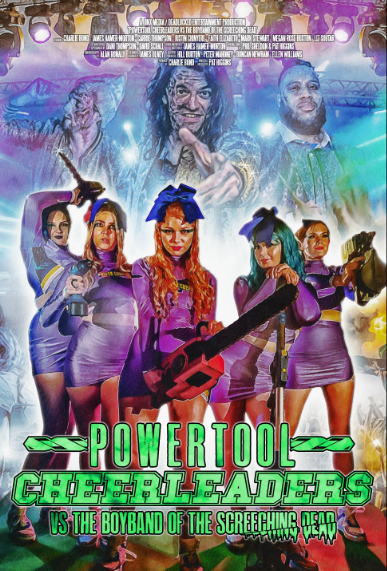
Pat Higgin’s masterclasses are one of the re-occurring events at Southend’s annual Horror-On-Sea film festival. The first talk I attended, Write a Bloody Movie in 30 Days gave me the kick I needed to complete the film script The Bedford Experiment. So in 2022, when Pat was due to give a talk about his, as of then, unreleased film Powertool Cheerleaders vs The Boyband of the Screeching Dead, it seemed like a good idea to go along.

Film Poster for Powertool Cheerleaders vs the Boyband of the Screeching Dead, directed by Pat Higgins
Powertool Cheerleaders – Pat Higgins’ latest film.

Apart from discussing his own film, Pat delved into the practical idea of how to make a film. In particular, he referenced Robert Rodriguez, who posited the idea that you should write a film around what you actually have and not what you want. This is to stop your entire production process grinding to a halt, when you realise you don’t have access to forty camels and a space station.

But, as with all of Pat’s talks, although packed with great ideas and practical advice, the real force behind them was Pat’s infectious enthusiasm and ‘can do’ attitude. It was that, which made me believe, making a film was actually possible.

Keep It Simple, Stupid

Armed with this belief, a chink of light began to break through the Resistance force field. However, the negative voice was, and still is, ever present. But I realised I could dial it down, very slightly, by using one fundamental trick – having a plan, but keeping it simple.

A plan, even a stupid one, is better than no plan at all, as you can change a stupid plan. Without a plan, you may have a destination in mind, but with no road map to get there, you will flounder from the start – or at least I would. So I decided that my plan would take the form of a few basic rules. The rules were not original, but I decided to write them up and try my best to stick to them:

  1. Actually ask yourself the question – are you going to make a film. If yes, commit to it.
  2. The film will be five minutes or less.
  3. You should not spend any money. You can only use what is actually available to you. If you have access to a restaurant, a bar, an office, etc. That is your location. Use it.
  4. The film will not be perfect, not even close. You just have to make something that exists.
  5. You will enter it into a film festival. You have no control over it being accepted. The important thing is to get it entered.

All of the rules had solid reasons behind them. But, there was a sixth rule which sat outside the core five. It said the film had to be made in the traditional manner. A script had to be written, shots planned, a monster built, cameras and lights set up. The intention had to be, to create a film through the film making process and not simply an, on the fly, TikTok video.

S.M.A.R.T

All the rules could be seen as SMART goals. The acronym stands for

  • Specific
  • Measurable
  • Achievable
  • Relevant
  • Time Bound

As a defined structure, it is not a bad one to follow, if you are trying to come up with a plan to get something done.

However, out of all of the goals, I would stress the importance of Time Bound. Your project must have a deadline. Without an end point, you will have no urgency to complete what you have started. Instead, you will just drag your feet, the dreaded Resistance will set in, and that will be that. So in my case, the deadline was the need to send the film off to a film festival, in particular Horror-On-Sea and Romford Horror. Both festivals were local to me and had cut off points for submissions, so Am Here had to be completed by their submission dates.

There was a second reason for sending the film into the ‘outside world’ – it would objectively exist. The film would have to be viewed by people divorced from the family / friends bubble, to decide whether or not it was suitable for their festival.

Obviously, the film being accepted by a festival was beyond my control, but this too was important. It crystallised what I could not control, which was how my film would be received. All I could control was the creative process. But if it was accepted, then I would have leapt that gap from passive festival goer to active film-maker.

Collaboration

Generally speaking, film making is a collaborative process, so unless I was going into animation, I needed a partner in crime.

The first person I turned to was Liam Jordan. He worked where I worked, is incredibly creative and had produced the art work for my second book The Big Stench, so he seemed like the ideal collaborator. And when I asked if he wanted to help me make a short film, he immediately said yes.

The actor Liam Jordan faces the monster in the short film Am Here.
Liam faces the Beast in Am Here.

Once there were two of us, the question became, do we need more? It would seem that the obvious answer is yes. More people would make the process of making the film easier. But we were going to be shooting predominantly at night, in the middle of London and attempting to fit multiple people into a schedule would not be easy. Plus, with no money to spend, we would be relying on good will and that would only stretch so far.

In the end, we only used one other person, Michael Sprindzuikate. He assisted us on an entire Saturday shoot (which really helped us out), and more importantly, he composed the score which brought the entire short film together.

Positivity vs Bloody Mindedness

The people you have around you can dictate how your project goes. If you have someone who works with you and not against you, who sees mole-hills not mountains, who keeps pushing you forward, all well and good. But if you have someone who is constantly critical, who is always voicing your own internal doubts, then you may be better off without them.

Either way, it soon becomes clear that some people are filled with unbridled positivity and others are not. I am not. Facebook platitudes make me wince. However, if you pursue any kind of goal, it does require a degree of positive thinking. You had to believe the endeavour was worthwhile, otherwise why did you start it in the first place? So you have to strive to maintain that optimistic outlook, which convinced you to start your project. But you also need to acknowledge that it will waiver. So how do you cope when positivity wains? I would suggest you have to resort to resolute stubbornness, and that needs to be supported with a virtual tool-kit.

If you have come up with a series of rules or a plan, they can keep you on the straight and narrow. When you read them they will help to reset your focus. Also, sweat the small stuff. Break your large, overwhelming project, down into its constituent parts and concentrate on taking small steps towards your end goal. Because the undeniable truth behind, writing a novel, making a film or hammering out a script, is that it is less about talent and skill and more about rolling out of bed, turning up every day, and simply doing it.

And no matter what and no matter how slowly, you have to keep moving forwards. If you grind to a halt, it is very difficult to get yourself going again. So do not stop.

Bridging Gaps

The Romford Film Festival 2023 laurel.
Romford Film Festival laurel 2023.

Despite all the challenges, the horror short Am Here was made. It exists and was accepted by the Romford Film Festival where it was shown on the 25th February 2023. This was an amazing experience which I will never forget. I had set out to move from being a passive member of the audience to being a filmmaker, and I had succeeded. But how?

The more I think about it, the more I realise it was all about bridging gaps. Some of the gaps were practical, they required knowledge and information to cross over them. Others were more complicated and were to do with mind set: the gap between knowing and believing; between action and inaction; between committing and not committing. Each of those gaps can be crossed, but the belief needed and the skills required can be different every time. For example, making the film is very different to sending the film off to a festival – you have to learn new things and overcome the differing doubts that Resistance will throw at you. Equally, raising money to finance a film, is a very different and complex issue, to that of shooting a short with no money at all. But all these problems, all these gaps, need to be bridged. And if you persevere, if you continue moving forwards, eventually you will produce something. It may not be the thing you thought it would be when you started. It may be flawed beyond belief, but it exists and if you accept it, it could be the stepping stone on to something else. However, what that something else is, you will never know unless you bridge that first gap between knowing and believing.

On the stage at Romford Film Festival 2023 where Kevin Haldon interviews Matt Taylor director of Tealight and me.
Kevin Haldon interviews Matt Taylor (director of TeaLight) and myself at Romford Film Festival 2023

The Big Why

‘Why did you make this film?’ ‘Why did you write this book?’ ‘Why now?’

These are the most difficult questions I can ask. Even now I do not have a complete answer. Yet I cannot, in my mind at least, over-exaggerate their importance.

The answers you arrive at (if you arrive at any answers at all), may not dictate the success or failure of your project, but it can certainly affect how you think of that project’s success or failure. And it can also affect whether or not you continue to pursue your chosen path.

If your answer is ‘I am making this thing as a calling card to break into the industry’ (whatever that industry may be) or ‘to make a lot of money’, or ‘to achieve worldwide fame’. These are reasonable answers, if problematic. Because your decision to pursue a given creative path now hangs upon some external gatekeeper, rewarding your endeavours. What happens if that reward never comes, you never break in, you never make money, your never achieve fame, what then? Do you just stop? And what does it mean if you can’t stop? What is the answer to all the big ‘why’ questions then?

In my case, the answer has little if anything to do with success. At least not now. If it did I would have packed up long ago. For me, the answer is embedded within the very act of ‘doing’ itself. I enjoy writing, I enjoy developing stories, building a structure and populating it with characters. I enjoy standing on the edge of the creative cliff and daring myself to jump. And maybe that is the answer to why I made Am Here. It was a leap into the creative unknown and you take that leap because sometimes you just do. However, even this is not an honest answer. I think the true why is buried far deeper than that, so I guess, I will just have to keep on digging and maybe make another film.

Alternative Am Here film poster. Artwork by Liam Jordan.
Am Here film poster. Art work by Liam Jordan.

Dr Cyclops (1940)

Directed by Ernest B. Schoedsack

Dr Cyclops opens in the depths of the Peruvian jungle. Dr Mendoza (Paul Fix), arrives to question Dr Thorkel (Albert Dekker) about his experiments. But when he challenges Thorkel and tells him that he is meddling with ‘powers reserved for God’ and must be stopped, Thorkel has little hesitation in killing him. Unfortunately, having murdered his assistant, Thorkel is left to rely on his failing eyesight, until eventually he is forced to contact others, to help him in his scientific endeavours.

Dr Rupert Bulfinch (Charles Halton) is the one to receive Thorkel’s request for help and he in turn recruits Dr Mary Robinson (Janice Logan) and Bill Stockton (Thomas Coley). After a long time travelling, they all arrive at Thorkel’s camp, accompanied by Steve Baker (Victor Kilian) who owns the mules they have hired. Before they even have a chance to rest, Dr Thorkel asks them to examine some slides. To their surprise, once they have given their assessment, Thorkel politely thanks them for their help and tells them their work is down and that they must now return home.

Angry and frustrated that they have been called into the jungle to simply look down a microscope, the group refuse to leave. Instead they discover that Thorkel is sitting on top of a Radium mine. A fact they immediately want to exploit, both for the benefit of science and their own personal gain.

Driven to find out exactly what Thorkel is up to and why he requires the Radium, the group break into Thorkel’s hut where he catches them reading his scientific journals. After an angry outburst, Thorkel apologises and decides to show them his work. He gathers them all into his experimental chamber, including Pedro (Frank Yaconelli) his local dogsbody, and shrinks them to one tenth their normal size. Thorkel’s aim is to both study them and stop them from returning to civilisation and reporting on his work. But, once shrunk it does not take long for the group to escape and, from then on, the film becomes a game of cat and mouse as Thorkel tries to hunt them down. A game given all the more urgency when Thorkel realises the shrinking effects are wearing off.

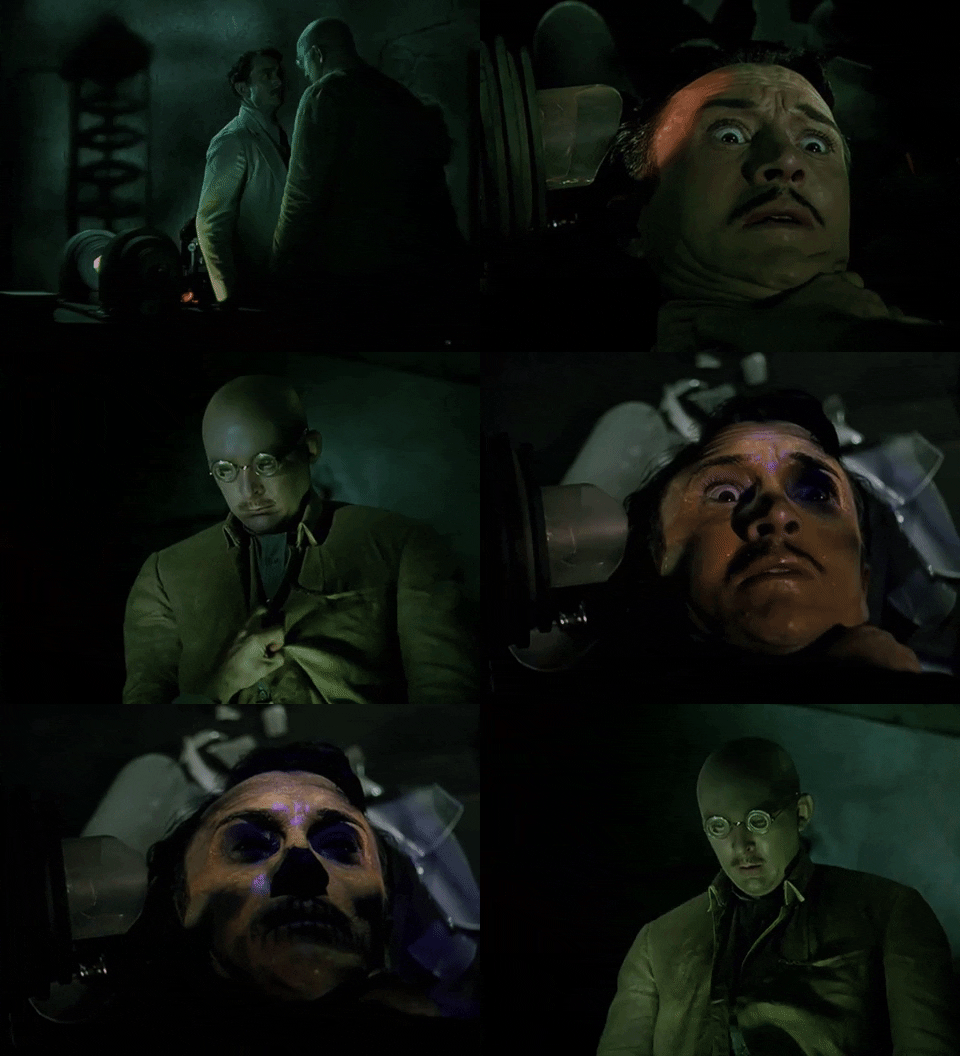
Visually the film is rich and vibrant, yet it is the opening scene which has the most impact, as it appears to have been photographed in a style deliberately reminiscent of the two colour Technicolor process, used to such great effect in Doctor X (1932). The ominous palette of blues and greens (which are repeated whenever Dr Thorkel is working), is striking, both in how it highlights the horror of Dr Mendoza’s murder, as well as seeking to offer a direct juxtaposition with the lush Peruvian jungle.

Although Dr Cyclops is neither the first nor the last film in which the lead protagonists are shrunk, the actual special effects are remarkable given that the film was made in 1940. The use of rear projection in conjunction with over sized props, all helped Dr Cyclops to a deserved Academy Award nomination, only to lose out to the astounding effects work on The Thief of Bagdad (1940). However, you cannot watch Dr Thorkel grabbing Bulfinch and examining him, without thinking back to probably Schoedsack’s most famous work, the original King Kong (1933), which he co-directed with Merian C. Cooper. In that film Fay Wray was the one being grabbed by the huge articulated hand instead of Charles Halton, but visually, it is strikingly familiar.

The performances themselves are solid if unremarkable, except, that is for Albert Dekker as Dr Thorkel. Dekker plays the scientist with a quiet yet deliberate intensity, which makes his murder of Bulfinch seem all the more callous and brutal. Yet he also manages to elicit a degree of sympathy for Thorkel due to the scientist’s constant air of exhaustion and ever decaying eye sight. Although, this sympathy is driven in no small part by the fact that those who are shrunk (excluding Pedro), bring their fate down upon themselves.

Before Dr Bulfinch even leaves the comfort of the United States, he is warned that Thorkel is unstable, ‘and now that for years he has buried himself in the Amazon jungle, who knows what his mental state may be.’ But Bulfinch chooses to ignore the warning. He has been called to help the great Thorkel and his pride will not allow him to resist such an opportunity. So with the assistance of Dr Robinson, he recruits the slothful Stockton and leads them into the jungle. Only for his pride to come into play a second time, when he decides to ignore Thorkel’s instructions to leave, even after being insulted by Thorkel’s initial treatment of him, “I will not be treated like an errand boy,” Bulfinch states to the rest of the group. However, after receiving a thinly veiled threat from Thorkel the following day, and witnessing apparent evidence of Thorkel’s madness, Bulfinch changes his mind, that is until they all discover the presence of the Radium mine. At which point, pride and greed combine to drive them all into Thorkel’s cabin, for which they are duly punished.

That is not to excuse Thorkel for his actions. From the very start of the film he is shown to be a cold blooded killer, destroying anyone who gets in his way, but to what end? He states during the film’s opening minutes that he has in his hands the “… cosmic force of creation itself..we can shape life, take it apart, put it together again, mould it like putty.” Yet, what does he do? He makes things smaller, but it is never explained why or for what purpose. Instead, it is simply an empty device, conjured up by the writers, about a man with fading eyesight who is obsessed with miniaturisation.

Despite the film’s apparent emptiness, it is certainly entertaining, chugging along at a frenetic pace, leaping from murder to peril to threat’s thwarted. It never outstays its welcome and nor should it, after all it is simply a boy’s own adventure coated in an Atomic veneer. However, what it does do in a minor way, is reflect the attitudes and anxieties of the time. Dekker’s make-up can easily be seen as a reflection of the rising tide of anti-Japanese sentiment experienced by America, only a few years before Pearl Harbour. And the Radium mine is indicative of how nuclear power was perceived, as something which offered great benefits yet did so with the threat of disastrous consequences. Janice Logan’s character suffers the expected burden of the inherent sexism of the time, she may be a biologist but when moccasins need stitching she is the woman for the job. However the more overt sexism against her character appears to be reserved for the publicity shots and posters for the film, with her either writhing in Dr Thorkel’s hand as a beam of light shoots from his eye or about to be stamped on by a giant boot (a shot which unfortunately is not in the film). As for Pedro, his treatment displays a casual racism, so undoubtedly prevalent during the 1930’s and ’40’s. He is shown to be lazy and ignorant and yet with all that said, he is ultimately heroic, sacrificing himself to save the rest of the group.

But where the true strengths of Dr Cyclops lie are in its delicious ironies, because the film is ultimately a trick, a joke played by the writers upon us, the audience. It can be argued that all films are tricks to some extent, but rarely is one filled with so many self destructive characters and such a magnificently ironic, yet empty, central idea. It is the characters own greed and pride which drives them to their fate at the hands of Dr Thorkel, a man who can barely see, yet is obsessed with shrinking everything out of sight. And the ultimate joke, the ultimate irony, is left to the end of the film as Thorkel, the scientist who never succeeded in shrinking the world and keeping it shrunk, plummets to his own, ever decreasing death, down the Radium mine, never to be seen again.